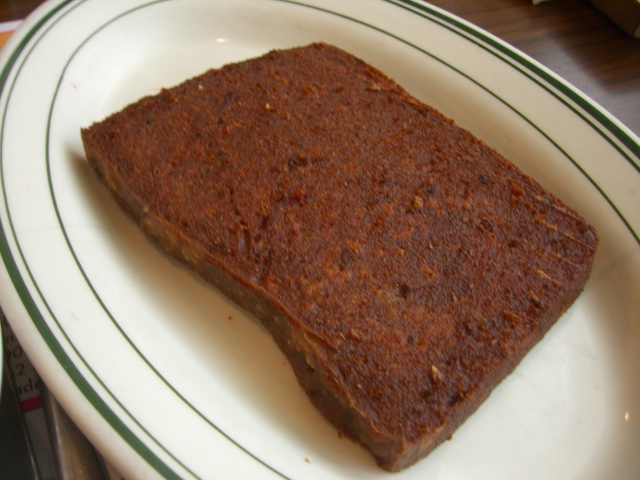
I really should make an effort to get to Astoria more. Most of the time, though, I head that direction and...keep going to Flushing. Uncle George's Greek Taverna is the first restaurant that inspired me, years ago, to periodically make the trek to Queens for dinner - the one that started it all! But I hadn't been in a while (too much regional Chinese food to explore), and then I read somewhere on the internet that it had closed. That bummed me out, but it somehow never occurred to me to doubt the information. Then someone told me that it had not, in fact, closed, and I finally remembered to have a look for myself when I was I in the neighborhood this evening. Just goes to show - don't believe everything you read on the internet!
I'll be damned if I can figure out why there seems to be so much misinformation out there about Uncle George's. I have read more bad notices of this place than any restaurant that I love that I can think of. And I have never had a bad meal here. Keep it simple and traditional, and you'll be fine. And be sure that at least one meat from the rotisserie is part of your meal. Tonight proved that their kontosouvli (pork) - my single favorite menu item here - is still as great as ever. Fourteen bucks gets you a huge portion of 12-15 chunks of beautifully seasoned spit-roasted pork, plus a side dish (their lemon potatoes are excellent). I brought a friend from Portugal here a few years ago who, like most Portuguese, takes good food very seriously. He took one bite of the pork and said "It was worth coming all the way from Portugal just to taste this." The arni souvlas (lamb) is almost as good.
Also not to be missed are the dolmadakia, grape leaves stuffed with rice and meat, served hot covered in an egg-lemon sauce. My favorite grape leaves anywhere. Start with some traditional cold dips for an appetizer--the traditional trio of skordalia (mashed potato and garlic), taramosalata (fish roe spread), and tzatziki (yogurt, cucumber, and garlic) is uniformly great. Not that I'm an expert, but the texture of each one seems just right (unlike those of Taverna Kyclades), and the flavors are clear and strong.
The oven-roasted leg of lamb here is also very good, and I still remember a delicious orzo cooked in the roasting juices that came with it (this was years ago) - I'm not sure if that's something they have regularly, but it's worth asking. Although I've never ordered fish here, carnivore that I am, I'm told their whole grilled fish are good and I believe it. I also hear that this is not the place to get things like gyro and souvlaki, but I can't imagine why you would with so many other stellar options on the menu.
Oh, and it's open 24 hours.
Uncle George's Greek Taverna
33-19 Broadway, Astoria 11106
718-626-0593
(N or Q train to Broadway, then 2 blocks east)
Tuesday, February 7, 2012
Sunday, January 29, 2012
Ala Shanghai 上海館子
While in Schenectady, performing a couple of recitals, my delightful soprano Jennifer took me to what she said was the best Chinese restaurant in the area, Ala Shanghai 上海館子 (shàng hǎi guǎn zǐ in Mandarin, which literally means "Shanghai restaurant"). It's damn good for any area.
This place serves better food than any Shanghai-style restaurant in NYC. I would be delighted to have it just a bus (or, if you insist, subway) ride away. Since Jennifer's husband wasn't feeling well, it was just the two of us, so we were a bit limited as to what we could order from the varied and interesting menu, but everything we did get was top-notch. We started with a combination plate of four cold appetizer items: drunken chicken (醉雞 - zuì jī), soy beef (五香牛肉 - wǔ xiāng niú ròu), sliced pork shank (扎蹄 - zā tí), and and salted duck (鹽水鴨 - yán shuǐ yā). This is easily the best drunken chicken I have ever tasted, and the thin slices of brined pork shank were equally wonderful. Thin slices of beef that had been simmered in a five-spice broth were subtly flavored, and the duck - just as good as everything else on the plate.
"Salted veggie w. soybean & tofu sheet" (雪菜毛豆百葉 - xuě cài máo dòu bǎi yè) was a lovely stir fry of salted mustard greens, tender young soy bean and ribbons of tofu skin - a great variety of interesting textures and subtle flavors. Tong-Po pork (東 坡 肉 - dōng pō ròu), the famous dish Zhejiang dish of pork belly braised in soy sauce, sugar, and other spices is also the best version of this dish I have ever tried. The title used to be held by the now-defunct China 46 in New Jersey, but Ala Shanghai's is equally good, and even better for my tastes, not as sweet.
But the culinary star of the evening was their "pork intestine w. onion in pot" (红焼 大腸煲 - hóng shāo dà cháng bāo). This is another "red-cooked" dish like Tong-Po pork, braised in soy sauce and sugar, but the slices of intestine are then mixed with a generous amount of scallion and served in a hot clay pot. Stupendous. I have got to find somewhere I can get this dish in NYC.
Ala Shanghai 上海館子
468 Troy-Schenectady Rd., Latham, NY 12110
518-783-8188
website
This place serves better food than any Shanghai-style restaurant in NYC. I would be delighted to have it just a bus (or, if you insist, subway) ride away. Since Jennifer's husband wasn't feeling well, it was just the two of us, so we were a bit limited as to what we could order from the varied and interesting menu, but everything we did get was top-notch. We started with a combination plate of four cold appetizer items: drunken chicken (醉雞 - zuì jī), soy beef (五香牛肉 - wǔ xiāng niú ròu), sliced pork shank (扎蹄 - zā tí), and and salted duck (鹽水鴨 - yán shuǐ yā). This is easily the best drunken chicken I have ever tasted, and the thin slices of brined pork shank were equally wonderful. Thin slices of beef that had been simmered in a five-spice broth were subtly flavored, and the duck - just as good as everything else on the plate.
"Salted veggie w. soybean & tofu sheet" (雪菜毛豆百葉 - xuě cài máo dòu bǎi yè) was a lovely stir fry of salted mustard greens, tender young soy bean and ribbons of tofu skin - a great variety of interesting textures and subtle flavors. Tong-Po pork (東 坡 肉 - dōng pō ròu), the famous dish Zhejiang dish of pork belly braised in soy sauce, sugar, and other spices is also the best version of this dish I have ever tried. The title used to be held by the now-defunct China 46 in New Jersey, but Ala Shanghai's is equally good, and even better for my tastes, not as sweet.
But the culinary star of the evening was their "pork intestine w. onion in pot" (红焼 大腸煲 - hóng shāo dà cháng bāo). This is another "red-cooked" dish like Tong-Po pork, braised in soy sauce and sugar, but the slices of intestine are then mixed with a generous amount of scallion and served in a hot clay pot. Stupendous. I have got to find somewhere I can get this dish in NYC.
Ala Shanghai 上海館子
468 Troy-Schenectady Rd., Latham, NY 12110
518-783-8188
website
Labels:
Albany-Schenectady,
Chinese,
Shanghai
Monday, January 23, 2012
White Manna
Hamburgers are not a foodstuff I will be writing about often on this blog. They certainly are the rage these days all over New York City, though. But why an outfit like Shake Shack, for instance, warrants all they hype (or the now 7 locations in NYC, or 12 worldwide, including one in Dubai!) is COMPLETELY beyond me. Gray, slightly dry blocks of ground meat (you cannot request doneness there) are not and will never be my thing and I utterly fail to understand their mass appeal. Unless a hamburger is closing in on a half-pound of meat and is red in the center, you can keep it. Unless it's White Manna.
Did you ever wonder if White Castle hamburgers were ever any good? I'm guessing they actually were, over a 80 years ago. According to the Wikipedia page, when they began, they made their hamburgers exactly the same way the White Manna does now: throw some sliced onions on the hot grill, place a small ball of freshly ground beef (at White Manna, it's still red - you can watch them do it) on the onions, smash the ball into a patty, flip, place the bun on top so the flavors can steam into it, assemble with pickle slice, and serve. But White Castle abandoned the idea selling real food in 1931 when they switched to frozen hamburger patties (the hideous five holes were added in 1951).

First opened in 1946, White Manna was once a mini-chain of five diners in New Jersey. Now there are just two left - the one in Hackensack, and the original location in Jersey City (which is the historic diner building of the 1939 World's Fair in Flushing Meadows). Word on the street is that the burgers at the Hackensack location these days are significantly better. And they are divine. Sliders made of freshly grilled, freshly-ground beef with grilled onions, American cheese (if desired, and I do), on a steamed fresh potato-flour bun... what could be better? If I can't have the half-pound, almost mooing slab of red ground meat, this is the next best thing. And there are times when it is THE best thing.
These heavenly bites are, to my mind, worth the trip from just about anywhere, and I often take the NJ Transit bus (165 from Port Authority to Passaic St.) when I can't interest anyone in driving me. It is well worth the effort EVERY time.
(photo courtesy of Alan Baer, principal tuba, New York Philharmonic Orchestra)
White Manna
358 River St., Hackensack, NJ 07601
201-342-0914
Did you ever wonder if White Castle hamburgers were ever any good? I'm guessing they actually were, over a 80 years ago. According to the Wikipedia page, when they began, they made their hamburgers exactly the same way the White Manna does now: throw some sliced onions on the hot grill, place a small ball of freshly ground beef (at White Manna, it's still red - you can watch them do it) on the onions, smash the ball into a patty, flip, place the bun on top so the flavors can steam into it, assemble with pickle slice, and serve. But White Castle abandoned the idea selling real food in 1931 when they switched to frozen hamburger patties (the hideous five holes were added in 1951).
First opened in 1946, White Manna was once a mini-chain of five diners in New Jersey. Now there are just two left - the one in Hackensack, and the original location in Jersey City (which is the historic diner building of the 1939 World's Fair in Flushing Meadows). Word on the street is that the burgers at the Hackensack location these days are significantly better. And they are divine. Sliders made of freshly grilled, freshly-ground beef with grilled onions, American cheese (if desired, and I do), on a steamed fresh potato-flour bun... what could be better? If I can't have the half-pound, almost mooing slab of red ground meat, this is the next best thing. And there are times when it is THE best thing.
These heavenly bites are, to my mind, worth the trip from just about anywhere, and I often take the NJ Transit bus (165 from Port Authority to Passaic St.) when I can't interest anyone in driving me. It is well worth the effort EVERY time.
(photo courtesy of Alan Baer, principal tuba, New York Philharmonic Orchestra)
White Manna
358 River St., Hackensack, NJ 07601
201-342-0914
Labels:
Hamburgers,
New Jersey
Monday, January 16, 2012
Hahm Ji Bach (함지박)
This evening I joined Pete and his charming friend Youlim for a meal at Hahm Ji Bach (함지박), just a stone's throw from the Murray Hill LIRR station in Flushing. I'm glad I did; it's the best Korean meal I've had in a very long time – maybe ever.
Hahm Ji Bach specializes in meat dishes, barbecue in particular. So, following our waitress's excellent suggestions, we ordered four barbecue items, plus a pa jeon to start. Somehow, a seafood bibimbap got ordered, too...because we just didn't have quite enough food for the three of us, I'm sure.
A stunning array of banchan instantly appeared, all beautifully prepared (made in-house, of course). (Photos by Pete)

There were several kinds of kimchi, including a particularly nice one made with thin slices of the knobby stem of a mustard plant, the kind from which the Chinese make their preserved vegetable. Curiously absent was the normal fermented kimchi made with white cabbage...I didn't miss it one bit. There were a couple of seafood banchan, too, including chunks of crab in red pepper, and bits of deep-fried squid. The haemool pajeon (해물파전 – seafood pancake) was, for me the perfect combination of crisp on the outside and just chewy and moist enough on the inside – the best I've had in a long time. And the dipping sauce – indeed, all the dipping sauces here – was particularly delicious.
There is almost always something slightly disappointing to me about Korean barbecue. It never seems to quite satisfy, or live up to the hype, or something. Such was not the case here. Dol samgyupsal (돌삼겹살), thick slabs of unmarinated pork belly, is something of a house specialty.

It was delicious, as much for the meat itself, carefully tended by the amazingly attentive wait staff, as the wonderful condiments and side items. Hahm Ji Bach is one of the rare establishments that offers ultra-thin, circular slices of daikon radish to wrap and eat barbecued meats with, and it's the perfect way to eat samgyupsal. That is, with some of one of the excellent dipping sauces and some shredded scallion. Hyomit gui (혀밑구 이) – delicate, thin slices of beef tongue (also unmarinated) – was perfection when simply dipped in gireumjang (기름장), a sauce of sesame oil and salt. Galbi gui (or, more specifically, yang nyum galbi gui –양념갈비구이) is the best galbi I've had anywhere.

Aside from the usual sugar and soy sauce, I’m not sure what's in the marinade, but I suspect one of the ingredients is crack. The wait staff saw to it that the pieces were perfectly cooked, and the wonderful house-made ssamjang (쌈장 - spicy bean paste) is the perfect sauce for dipping, before wrapping it in a frilly lettuce leaf and popping it in ones mouth. (Bliss ensues.)
We saw ori rohsu gui (오리로스구이) – dark-ish discs of some meat of indeterminate origin – at a neighboring table and inquired as to what it was. Upon learning it was duck, we decided to order that, too.

An excellent decision. Although unmarinated, the meat was tender and flavorful, and a delightful change of pace. The only way any of it could have been improved would have been by grilling over wood embers instead of on gas grills. (Is there any Korean barbecue in Flushing that uses wood embers? Yanbian, yes, but I don't know of any Korean places.)
Somewhere amidst this avalanche of food, the haemul dolsot (해물돌솥 – seafood mixed with rice in a hot stone pot) surreptitiously appeared. It was fine, although a bit difficult to appreciate amidst all the barbecued meat. A simple, lovely beef and cabbage soup was also brought as something to sip between courses. To help wash this all down was a cucumber-infused soju. Quite mellow and smooth – my new favorite soju. And capping off this mammoth repast was a cup of pumpkin sikhye (식혜), a punch made with fermented rice. Not the kind of thing I normally like, but it was surprisingly light and refreshing. And at that point, we definitely needed some "refreshing"!
Satisfaction comes at a price, however. The barbecue dishes are on the expensive side. But - and I almost never feel this way about Korean barbecue - considering the high quality of the ingredients and marvelous attention to preparation, it's absolutely worth it. The prepared main dishes, on the other hand, are quite reasonably priced—in line with, or even a dollar or two less than, other Korean restaurants in Queens.
Hahm Ji Bach (함지박)
41-08 149 Pl., Flushing 11355
718-460-9289
(LIRR Port Washington branch to Murray Hill, or 7 train to Flushing-Main St., then the Q15 or Q15A bus to 150 St. (Murray Hill LIRR station). Then 1 block south on 149th Pl.)
website
Hahm Ji Bach specializes in meat dishes, barbecue in particular. So, following our waitress's excellent suggestions, we ordered four barbecue items, plus a pa jeon to start. Somehow, a seafood bibimbap got ordered, too...because we just didn't have quite enough food for the three of us, I'm sure.
A stunning array of banchan instantly appeared, all beautifully prepared (made in-house, of course). (Photos by Pete)

There were several kinds of kimchi, including a particularly nice one made with thin slices of the knobby stem of a mustard plant, the kind from which the Chinese make their preserved vegetable. Curiously absent was the normal fermented kimchi made with white cabbage...I didn't miss it one bit. There were a couple of seafood banchan, too, including chunks of crab in red pepper, and bits of deep-fried squid. The haemool pajeon (해물파전 – seafood pancake) was, for me the perfect combination of crisp on the outside and just chewy and moist enough on the inside – the best I've had in a long time. And the dipping sauce – indeed, all the dipping sauces here – was particularly delicious.
There is almost always something slightly disappointing to me about Korean barbecue. It never seems to quite satisfy, or live up to the hype, or something. Such was not the case here. Dol samgyupsal (돌삼겹살), thick slabs of unmarinated pork belly, is something of a house specialty.

It was delicious, as much for the meat itself, carefully tended by the amazingly attentive wait staff, as the wonderful condiments and side items. Hahm Ji Bach is one of the rare establishments that offers ultra-thin, circular slices of daikon radish to wrap and eat barbecued meats with, and it's the perfect way to eat samgyupsal. That is, with some of one of the excellent dipping sauces and some shredded scallion. Hyomit gui (혀밑구 이) – delicate, thin slices of beef tongue (also unmarinated) – was perfection when simply dipped in gireumjang (기름장), a sauce of sesame oil and salt. Galbi gui (or, more specifically, yang nyum galbi gui –양념갈비구이) is the best galbi I've had anywhere.

Aside from the usual sugar and soy sauce, I’m not sure what's in the marinade, but I suspect one of the ingredients is crack. The wait staff saw to it that the pieces were perfectly cooked, and the wonderful house-made ssamjang (쌈장 - spicy bean paste) is the perfect sauce for dipping, before wrapping it in a frilly lettuce leaf and popping it in ones mouth. (Bliss ensues.)
We saw ori rohsu gui (오리로스구이) – dark-ish discs of some meat of indeterminate origin – at a neighboring table and inquired as to what it was. Upon learning it was duck, we decided to order that, too.

An excellent decision. Although unmarinated, the meat was tender and flavorful, and a delightful change of pace. The only way any of it could have been improved would have been by grilling over wood embers instead of on gas grills. (Is there any Korean barbecue in Flushing that uses wood embers? Yanbian, yes, but I don't know of any Korean places.)
Somewhere amidst this avalanche of food, the haemul dolsot (해물돌솥 – seafood mixed with rice in a hot stone pot) surreptitiously appeared. It was fine, although a bit difficult to appreciate amidst all the barbecued meat. A simple, lovely beef and cabbage soup was also brought as something to sip between courses. To help wash this all down was a cucumber-infused soju. Quite mellow and smooth – my new favorite soju. And capping off this mammoth repast was a cup of pumpkin sikhye (식혜), a punch made with fermented rice. Not the kind of thing I normally like, but it was surprisingly light and refreshing. And at that point, we definitely needed some "refreshing"!
Satisfaction comes at a price, however. The barbecue dishes are on the expensive side. But - and I almost never feel this way about Korean barbecue - considering the high quality of the ingredients and marvelous attention to preparation, it's absolutely worth it. The prepared main dishes, on the other hand, are quite reasonably priced—in line with, or even a dollar or two less than, other Korean restaurants in Queens.
Hahm Ji Bach (함지박)
41-08 149 Pl., Flushing 11355
718-460-9289
(LIRR Port Washington branch to Murray Hill, or 7 train to Flushing-Main St., then the Q15 or Q15A bus to 150 St. (Murray Hill LIRR station). Then 1 block south on 149th Pl.)
website
Thursday, December 29, 2011
Burma Restaurant
When Jose (my formerly frequent eating companion who has been out of town entirely too much of late) told me there was a Burmese restaurant in Washington, D.C., my curiosity was immediately piqued. So this evening I headed to D.C.’s Chinatown for dinner at Burma Restaurant.
As I have lamented before, the biggest drawback of traveling solo is having to try new restaurants alone, so I was only able to try two dishes. But they were both delicious... homey and satisfying. I started with a bowl of mohinga, the unofficial national dish of Burma. It is a rather thick fish soup, flavored with lemongrass, ngapi (fish paste), garlic, and banana tree stem, with some rice vermicelli, crispy onions, and toasted split chickpeas providing some textural contrast. The flavor is unusual but mellow, even comforting. You can spike it yourself with the provided condiments of ground red chilis, cilantro, lemon, and fish sauce (salty, as opposed to the sweeter Vietnamese and Thai versions). I do wish they had provided some of the other traditional accompaniments like boiled egg, fritters, or fish cake, but that’s quibbling. This was followed by a chicken curry with potatoes. More like a thick stew than traditional Thai or Indian curries, it was a big bowl of three or four pieces of falling-off-the-bone tender chicken that had been simmered a long time in a complex yellow curry gravy with pieces of potato. And since a Burmese meal revolves around rice, there was a big bowl of basmati rice, too. It felt and tasted like home cooking... good, honest food.
Even though I practically begged them not to tone anything down just because I was a Westerner, nothing was what I think of as spicy...at all. Some subsequent reading up on the subject suggests that Burmese food is not, in fact, particularly spicy in general. Prices are quite reasonable, and the portions are enormous. I wish I could try everything on the menu.
Burma Restaurant
740 6th St. NW, Washington, D.C. 20001
202-638-1280
As I have lamented before, the biggest drawback of traveling solo is having to try new restaurants alone, so I was only able to try two dishes. But they were both delicious... homey and satisfying. I started with a bowl of mohinga, the unofficial national dish of Burma. It is a rather thick fish soup, flavored with lemongrass, ngapi (fish paste), garlic, and banana tree stem, with some rice vermicelli, crispy onions, and toasted split chickpeas providing some textural contrast. The flavor is unusual but mellow, even comforting. You can spike it yourself with the provided condiments of ground red chilis, cilantro, lemon, and fish sauce (salty, as opposed to the sweeter Vietnamese and Thai versions). I do wish they had provided some of the other traditional accompaniments like boiled egg, fritters, or fish cake, but that’s quibbling. This was followed by a chicken curry with potatoes. More like a thick stew than traditional Thai or Indian curries, it was a big bowl of three or four pieces of falling-off-the-bone tender chicken that had been simmered a long time in a complex yellow curry gravy with pieces of potato. And since a Burmese meal revolves around rice, there was a big bowl of basmati rice, too. It felt and tasted like home cooking... good, honest food.
Even though I practically begged them not to tone anything down just because I was a Westerner, nothing was what I think of as spicy...at all. Some subsequent reading up on the subject suggests that Burmese food is not, in fact, particularly spicy in general. Prices are quite reasonable, and the portions are enormous. I wish I could try everything on the menu.
Burma Restaurant
740 6th St. NW, Washington, D.C. 20001
202-638-1280
Labels:
Burmese,
Washington D.C.
Tuesday, November 8, 2011
Jiang Li Restaurant (鴻意順)
There seem to be Dongbei restaurants everywhere in Flushing now, and one of the newer ones is Jiang Li (鴻意順 - hóng yì shun, which, near as I can tell, means something like "great wish come true") on Kissena Blvd. It’s been open in this location somewhat over a year – before that, it was Hong Yi Shun down on Main St. I hear the chef/owner is from Dalian (Liaoning province), in case you want to place its specific geographic provenance within the Dongbei region. And I also hear that Wayne, the very pleasant fellow with great English who runs the dining room (he'll cheerfully answer any questions you may have) is the chef's nephew.
Jiang Li makes me miss Northeast Taste even more. This is not to slight Jiang Li - in fact, it's a compliment, because the cooking reminds somewhat of Northeast Taste's. But Northeast Taste really was something extraordinary, and served some unusual dishes I don’t expect to see in Flushing again any time soon. It also inspires in me a greater appreciation for the deft execution of the dishes at Fu Run. While the dishes at Jiang Li may not have the slickly polished presentation of Fu Run's, there is something very homey about the cooking here that is perhaps more satisfying. And there's the added bonus it's not as expensive!
It seems it's difficult to go wrong with casseroles here – I’ve tried three so far, and they have all been excellent. The beef stew with turnip casserole (蘿卜炖牛腩 - luó bo dùn niú nǎn) is memorably delicious, with a surprisingly complex, rich broth/sauce. I’m not particularly fond of turnip, but the dish was so tasty, I didn't mind a bit. (photos courtesy of Pete Cuce)

The name of the dish "small Chinese cabbage with pork short ribs" casserole (小白菜炖排骨 - xiǎo bái cài dùn pái gǔ)is a bit of a misnomer – it's small spare ribs stewed with bok choy and cellophane noodles, in a stellar broth. Great on a cool fall evening.

Perhaps my favorite dish here goes incognito under the name "pork with special sauce" (山東扣肉 - shān dōng kòu ròu). Judging from the name, it appears to be a Sichuan dish (扣肉 - kòu ròu richly seasoned steamed pork) by way of the nearby province (to Lianoning, that is) of Shandong. Whatever its origins, it is fabulous: sliced steamed pork belly in a wonderful sauce.

"Chicken with pine mushrooms" (小雞炖磨菇 - xiǎo jī dùn mó gū) turned out to be our old friend "stupid chicken" (as it was called on Northeast Taste’s menu), of which there is a version at literally every Dongbei restaurant in Flushing: pieces of chicken stewed with wild mushrooms and clear noodles. Jiang Li's is my favorite version these days.

Fresh hot pepper with dry bean curd (尖椒干豆腐 - jiān jiāo gān dòu fǔ) is a standard northern Chinese dish, and Jiang Li's is especially tasty, adding some broth to the stir-fry of squares of dried tofu sheets and green hot peppers.

Like Fu Run, Jiang Li has a quite a few Sichuan dishes on the menu. Their version of shuǐ zhǔ yú piàn (水煑魚片 - water-cooked fish slices, here called "poached fish with hot chili oil") is all right, but I would still save ordering it for a good Sichuan restaurant.

Dumplings are something I’m not eager to order again soon simply because you get twice as many top-notch dumplings for almost exactly the same price directly across the street at M & T. Still, the order of 10 three-treasure (pork, shrimp and chive) dumplings was very good.

Maybe if I beg Wayne and his chef uncle they’ll make caramelized egg fritters one night for me for dessert.
Jiang Li Restaurant
44-18 Kissena Blvd., Flushing 11355
718-321-1262
(7 train to Main St.-Flushing, south on Main St. to Kissena, veer left, then 6 more blocks)
Jiang Li makes me miss Northeast Taste even more. This is not to slight Jiang Li - in fact, it's a compliment, because the cooking reminds somewhat of Northeast Taste's. But Northeast Taste really was something extraordinary, and served some unusual dishes I don’t expect to see in Flushing again any time soon. It also inspires in me a greater appreciation for the deft execution of the dishes at Fu Run. While the dishes at Jiang Li may not have the slickly polished presentation of Fu Run's, there is something very homey about the cooking here that is perhaps more satisfying. And there's the added bonus it's not as expensive!
It seems it's difficult to go wrong with casseroles here – I’ve tried three so far, and they have all been excellent. The beef stew with turnip casserole (蘿卜炖牛腩 - luó bo dùn niú nǎn) is memorably delicious, with a surprisingly complex, rich broth/sauce. I’m not particularly fond of turnip, but the dish was so tasty, I didn't mind a bit. (photos courtesy of Pete Cuce)

The name of the dish "small Chinese cabbage with pork short ribs" casserole (小白菜炖排骨 - xiǎo bái cài dùn pái gǔ)is a bit of a misnomer – it's small spare ribs stewed with bok choy and cellophane noodles, in a stellar broth. Great on a cool fall evening.

Perhaps my favorite dish here goes incognito under the name "pork with special sauce" (山東扣肉 - shān dōng kòu ròu). Judging from the name, it appears to be a Sichuan dish (扣肉 - kòu ròu richly seasoned steamed pork) by way of the nearby province (to Lianoning, that is) of Shandong. Whatever its origins, it is fabulous: sliced steamed pork belly in a wonderful sauce.

"Chicken with pine mushrooms" (小雞炖磨菇 - xiǎo jī dùn mó gū) turned out to be our old friend "stupid chicken" (as it was called on Northeast Taste’s menu), of which there is a version at literally every Dongbei restaurant in Flushing: pieces of chicken stewed with wild mushrooms and clear noodles. Jiang Li's is my favorite version these days.

Fresh hot pepper with dry bean curd (尖椒干豆腐 - jiān jiāo gān dòu fǔ) is a standard northern Chinese dish, and Jiang Li's is especially tasty, adding some broth to the stir-fry of squares of dried tofu sheets and green hot peppers.

Like Fu Run, Jiang Li has a quite a few Sichuan dishes on the menu. Their version of shuǐ zhǔ yú piàn (水煑魚片 - water-cooked fish slices, here called "poached fish with hot chili oil") is all right, but I would still save ordering it for a good Sichuan restaurant.

Dumplings are something I’m not eager to order again soon simply because you get twice as many top-notch dumplings for almost exactly the same price directly across the street at M & T. Still, the order of 10 three-treasure (pork, shrimp and chive) dumplings was very good.

Maybe if I beg Wayne and his chef uncle they’ll make caramelized egg fritters one night for me for dessert.
Jiang Li Restaurant
44-18 Kissena Blvd., Flushing 11355
718-321-1262
(7 train to Main St.-Flushing, south on Main St. to Kissena, veer left, then 6 more blocks)
Tuesday, November 1, 2011
Sol Hyang Gee (솔향기)
After reading about it several weeks ago, I finally rounded up enough people this evening – or more accurately, Audrey Lo rounded up enough people – to make a trip to Sol Hyang Gee worthwhile. And worthwhile it definitely was.
Sol Hyang Gee is yet another Yanbian restaurant on the Flushing eating scene, but this one offers something special. If you’re reading this, you’re probably familiar with Korean barbecue. This place does table-top barbecuing of skewers over... wait for it... wood embers! The number of Korean barbecue restaurants that use wood embers has been steadily dwindling over the years (I can think of only a couple of others that still do). Most never had them in the first place, and the handful that did have been little by little changing over to the boring gas grills. Sol Hyang Gee sets itself apart from the rest right out of the gate.
Order from a huge selection of skewers – some 25 varieties, including lamb, mutton, pork, beef, various offal, fish, and seafood. Most arrive at the table raw, but some have been partially pre-cooked in the kitchen to be finished at the table. The surprise hit of the evening was mutton. We weren’t quite sure what to expect from what is essentially old lamb, but it grilled up tender and flavorful, perfectly complemented by the salt-and-pepper cumin mixture provided for dipping. The lamb arrived partially cooked, with a nice vinegar and honey glaze. The pork intestine was really lovely – small rounds that crisp up nicely with a bit of char, but stay meltingly tender. The only dud was, oddly, the short ribs. Also pre-cooked with a glaze, the miniscule pieces were as much cartilage as meat – annoying to eat, and, in the end, unsatisfying. And at twice the price of everything else we ordered, definitely not worth the cost. Also note that each variety of skewer lists "number of pieces": one piece equals one small skewer, not the number of chunks on one skewer. Most varieties work out to about $1.20 per skewer.
We also ordered the "house special sizzling bean curd" (鐵板豆腐 – tiě bǎn dòu fǔ, or iron slab tofu), and it was fantastic: squares of very lightly breaded tofu on a bed of sweet sliced onions on a sizzling iron plate, with a beautiful dipping sauce on the side. If you like tofu at all, get it.
Most of the Yanbian places I’ve been to in Flushing feel somehow more Chinese than Korean (and Yanbian is in China, after all), but Sol Hyang Gee feels more Korean. However, the delightful banchan are Yanbian all the way: bean sprout salad, a shredded daikon kimchi with the typical Yanbian flavor balance of a bit of spicy coupled with more than a bit of sweet and vinegary, bamboo shoots with jalapeño peppers (this was not nearly as flavorful as Feng Mao’s version), and boiled peanuts.
If you go, know that their awning says "Sol Hyang Lee". It’s a typo – you’ve found the right place!
Sol Hyang Gee (솔향기)
136-73 41st Ave., Flushing 11355
718-353-8160
(7 train to Flushing-Main St., walk 2 blocks south on Main, then left on 41st Ave.)
Sol Hyang Gee is yet another Yanbian restaurant on the Flushing eating scene, but this one offers something special. If you’re reading this, you’re probably familiar with Korean barbecue. This place does table-top barbecuing of skewers over... wait for it... wood embers! The number of Korean barbecue restaurants that use wood embers has been steadily dwindling over the years (I can think of only a couple of others that still do). Most never had them in the first place, and the handful that did have been little by little changing over to the boring gas grills. Sol Hyang Gee sets itself apart from the rest right out of the gate.
Order from a huge selection of skewers – some 25 varieties, including lamb, mutton, pork, beef, various offal, fish, and seafood. Most arrive at the table raw, but some have been partially pre-cooked in the kitchen to be finished at the table. The surprise hit of the evening was mutton. We weren’t quite sure what to expect from what is essentially old lamb, but it grilled up tender and flavorful, perfectly complemented by the salt-and-pepper cumin mixture provided for dipping. The lamb arrived partially cooked, with a nice vinegar and honey glaze. The pork intestine was really lovely – small rounds that crisp up nicely with a bit of char, but stay meltingly tender. The only dud was, oddly, the short ribs. Also pre-cooked with a glaze, the miniscule pieces were as much cartilage as meat – annoying to eat, and, in the end, unsatisfying. And at twice the price of everything else we ordered, definitely not worth the cost. Also note that each variety of skewer lists "number of pieces": one piece equals one small skewer, not the number of chunks on one skewer. Most varieties work out to about $1.20 per skewer.
We also ordered the "house special sizzling bean curd" (鐵板豆腐 – tiě bǎn dòu fǔ, or iron slab tofu), and it was fantastic: squares of very lightly breaded tofu on a bed of sweet sliced onions on a sizzling iron plate, with a beautiful dipping sauce on the side. If you like tofu at all, get it.
Most of the Yanbian places I’ve been to in Flushing feel somehow more Chinese than Korean (and Yanbian is in China, after all), but Sol Hyang Gee feels more Korean. However, the delightful banchan are Yanbian all the way: bean sprout salad, a shredded daikon kimchi with the typical Yanbian flavor balance of a bit of spicy coupled with more than a bit of sweet and vinegary, bamboo shoots with jalapeño peppers (this was not nearly as flavorful as Feng Mao’s version), and boiled peanuts.
If you go, know that their awning says "Sol Hyang Lee". It’s a typo – you’ve found the right place!
Sol Hyang Gee (솔향기)
136-73 41st Ave., Flushing 11355
718-353-8160
(7 train to Flushing-Main St., walk 2 blocks south on Main, then left on 41st Ave.)
Subscribe to:
Posts (Atom)